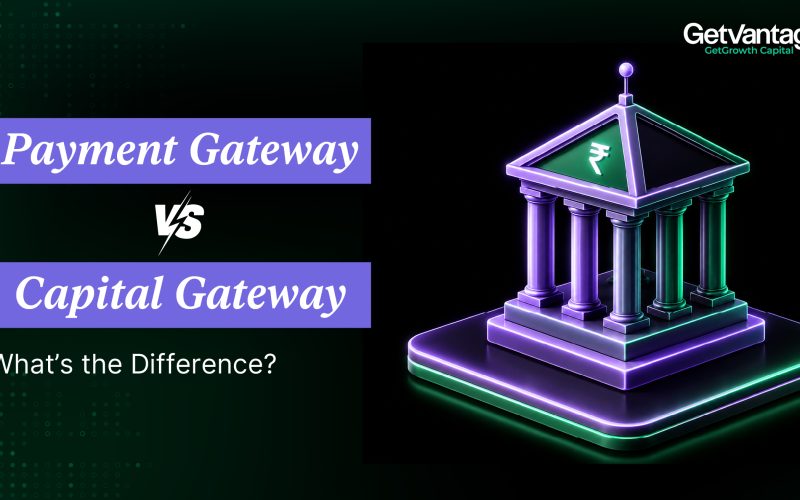
A Capital Gateway is an AI-native, API-first B2B fintech infrastructure layer that programmatically connects businesses to instant working capital from institutional funders. Unlike traditional balance-sheet lenders or standard small business loan providers, a capital gateway acts as a software router, integrating real-time operational data for cashflow-based finance, dynamic risk scoring, and embedded finance distribution without taking balance-sheet risk directly.
Introduction
For decades, accessing capital meant navigating a slow, rigid, and balance-sheet-heavy financial system. When modern enterprises needed growth funding, their only option was applying for a traditional small business loan, a process requiring stacks of paper documents, weeks of manual underwriting, and strict collateral.
As commerce shifted online, payment infrastructure evolved rapidly. Payment gateways made accepting digital money plug-and-play. However, the underlying rails for accessing capital remained stuck in legacy banking models.
Enter the Capital Gateway, a new category in B2B fintech built to serve as the programmatic infrastructure layer connecting businesses directly to flexible, tech-enabled capital providers.
What is a Capital Gateway?
A Capital Gateway is an API-first financial technology platform designed to act as the primary distribution pipe for business funding. Just as a payment gateway provides the software rails for a merchant to accept digital payments from customers, a capital gateway provides the digital rails for a business to access instant working capital from multiple financial sources.
Rather than operating as a closed vault or a legacy balance-sheet lender, a capital gateway functions as a software router. It leverages embedded finance principles to connect directly to a company’s day-to-day operational stack, unlocking seamless cashflow-based finance options like revenue-based funding, inventory funding, and seller financing.
How Does a Capital Gateway Work?
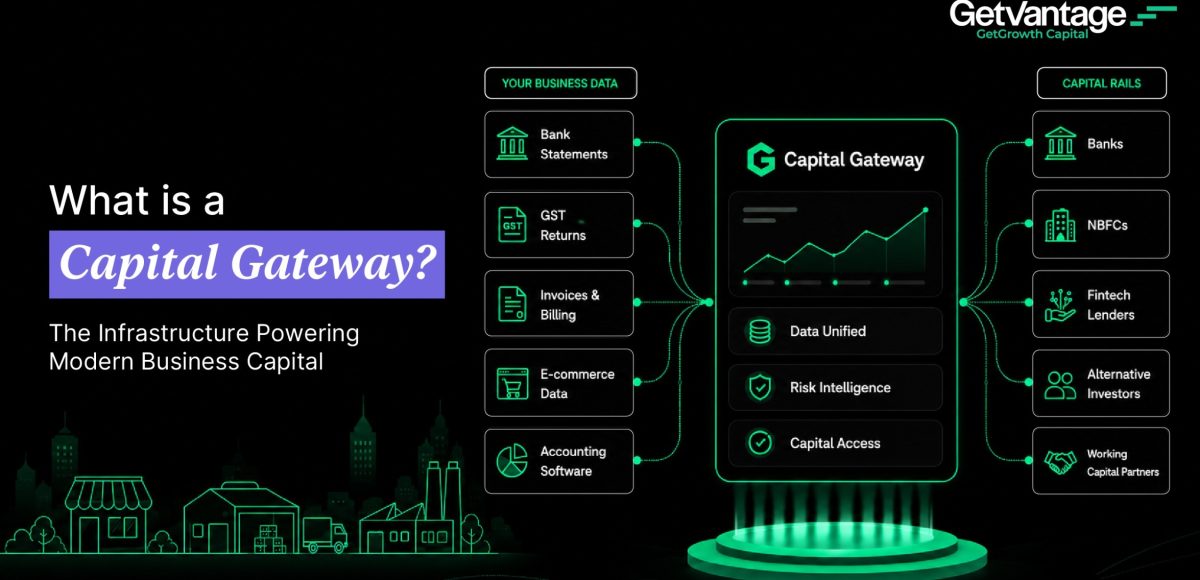
A capital gateway relies on an AI-native architecture divided into three core operational layers:
[ Business Stack ] ---> ( 1. API-First Data Ingestion )
                                    │
                                    ▼
                        ( 2. AI-Native Risk Engine )
                                    │
                                    ▼
[ Funder Network ] <--- ( 3. Programmatic Capital Router )
1. API-First Data Ingestion
Instead of requiring static tax returns or manual bank statements, a capital gateway connects directly to a company’s software tools via APIs:
- Payment processors and merchant gateways
- Enterprise Resource Planning (ERP) tools
- E-commerce platforms and marketplace seller accounts
- Modern cloud accounting software
2. AI-Native Risk Scoring Engine
The gateway continuously analyzes live operational telemetry, such as sales velocity, Customer Acquisition Cost (CAC), return rates, and cash flow trends. AI-native algorithms evaluate operating health in real time, making credit risk assessments far more accurate than legacy credit bureau scores.
3. Programmatic Capital Matching
Once a business is verified, the gateway routes the funding request to the optimal capital provider. Capital is deployed through dynamic, flexible rails designed for modern commerce, delivering instant working capital tailored to the business’s actual revenue performance.
Comparison: Capital Gateway vs. Traditional Loan Models
To understand where a capital gateway fits within the financial ecosystem, it helps to contrast it with legacy debt and alternative fintech models:
| Metric / Dimension | Traditional Small Business Loan | Legacy Embedded Finance | Capital Gateway |
| Core Architecture | Closed-loop balance sheet | Basic API wrapper on single lender | Multi-funder B2B fintech infrastructure |
| Tech Framework | Manual / Paper-based | Basic webhooks | API-first & AI-native data rails |
| Primary Risk Metric | Static collateral & historic credit | Historical point-of-sale volume | Live cashflow-based finance metrics |
| Underwriting Speed | 3 to 6 weeks | 24 to 72 hours | Instant / Programmatic routing |
| Funding Products | Rigid fixed-term debt | Single loan product | Dynamic (RBF, seller financing, inventory) |
Strategic Benefits of a Capital Gateway for Growing Businesses
By replacing traditional lending friction with software-driven capital distribution, capital gateways provide crucial advantages for modern operators:
- Zero Equity Dilution: Companies secure capital without giving up equity or seats on the board.
- No Asset Collateral Required: Funding approvals are tied to real-time sales performance rather than physical real estate or personal guarantees.
- Automated Scalability: As throughput and revenue grow, funding limits inside the gateway scale automatically, granting ongoing access to instant working capital.
Frequently Asked Questions (FAQ)
1. What is a Capital Gateway?
A Capital Gateway is an AI-native, API-first B2B fintech infrastructure layer that programmatically connects businesses to instant working capital from multiple financial providers. Unlike traditional lenders that hold loans on their own balance sheets, a capital gateway functions as a software router, integrating real-time operational data, automated risk scoring, and dynamic capital matching.
2. How does a capital gateway differ from a traditional small business loan?
A traditional small business loan relies on physical collateral, paper tax returns, manual underwriting, and rigid fixed monthly payments. In contrast, a capital gateway uses direct software integrations to deliver cashflow-based finance. Funding approvals and repayment terms dynamically align with actual real-time business performance rather than static historical metrics.
3. Is a capital gateway considered a balance-sheet lender or NBFC?
No. A capital gateway operates as a technology and distribution infrastructure layer rather than a balance-sheet lender. It programmatically routes data and capital throughput between businesses and institutional capital partners (like banks and credit funds), bypassing the traditional balance-sheet lender model.
4. What role does embedded finance play in a capital gateway?
Embedded finance allows the capital gateway to integrate directly into a merchant’s existing software ecosystem—such as payment processors, ERP systems, e-commerce platforms, and accounting tools. This enables friction-free data verification, automated risk assessment, and non-disruptive capital deployment (like seller financing and inventory funding) right where the business operates daily.
5. How does a capital gateway determine funding eligibility?
Eligibility is evaluated using API-first data connections that analyze live operating telemetry. The gateway’s AI-native algorithms look at performance indicators like recurring revenue, customer acquisition cost (CAC) efficiency, sales velocity, and cash flow consistency, eliminating the need for collateral or personal guarantees.
6. What types of funding products pass through a capital gateway?
A capital gateway routes a wide variety of non-dilutive, cashflow-based finance structures depending on the business’s immediate needs. These include revenue-based financing (RBF), inventory and purchase order funding, seller financing, invoice discounting, and dynamic working capital lines.